



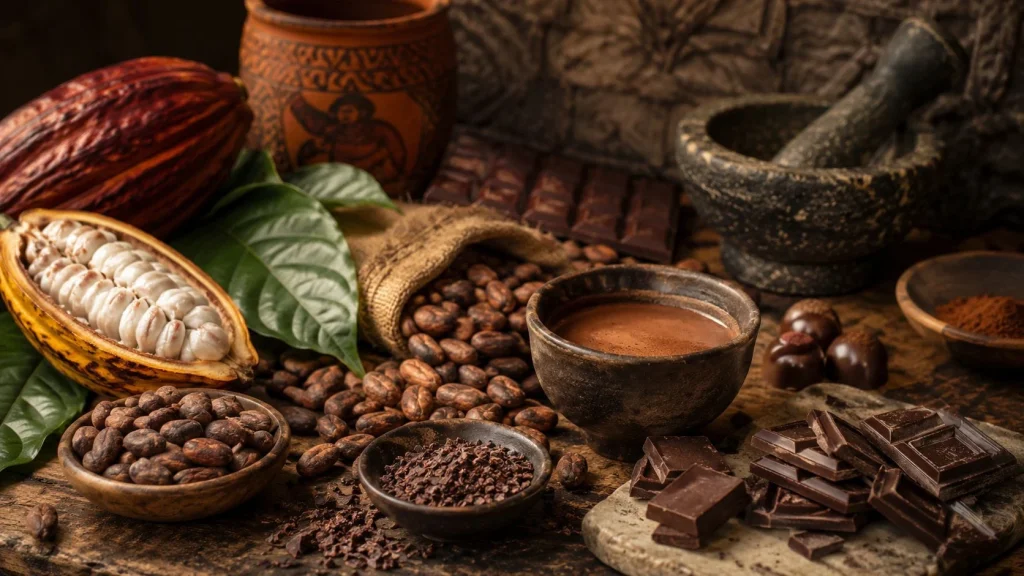
Chocolate is one of the most beloved foods in the world, but its story began long before it became a sweet bar, a dessert topping, or a creamy drink. The history of chocolate is the history of cacao: a tropical fruit, a sacred drink, a trade item, a luxury product, and finally an everyday pleasure enjoyed across cultures.
Cacao comes from the cacao tree, a tropical plant that grows best in warm, humid regions near the equator. The tree produces large pods that contain cacao beans surrounded by a soft white pulp. These beans are the foundation of all chocolate. Before they become chocolate, they must be fermented, dried, roasted, cracked, ground, and refined. This long process is one reason chocolate has always carried a sense of value and craftsmanship.
The earliest known use of cacao can be traced to ancient Mesoamerican cultures. Long before modern chocolate existed, cacao was prepared as a drink. The Maya valued cacao deeply and used it in daily life, rituals, celebrations, and social gatherings. Their cacao drink was very different from the sweet hot chocolate many people know today. It was often bitter, frothy, and mixed with water, spices, chili, or maize. It was not simply a dessert. It was a meaningful part of culture.
For the Maya, cacao was connected to life, fertility, and ceremony. It appeared in art, stories, and important events. Cacao drinks were served during weddings and religious occasions. The beans also had economic value. In some places, cacao beans were used as a form of currency, showing how precious they were.
The Aztecs also prized cacao. Because cacao trees did not grow easily in the highlands where the Aztec capital was located, cacao was brought through trade or tribute from warmer regions. This made cacao especially valuable. The Aztec elite drank cacao as a bitter, energizing beverage. It was associated with strength, status, and power. Warriors, rulers, and nobles consumed it, while ordinary people had less access to it.
When Europeans arrived in the Americas in the 16th century, they encountered cacao and brought it back to Europe. At first, the bitter drink was unfamiliar. Over time, Europeans began adding sugar, cinnamon, vanilla, and other ingredients. This changed the flavor and helped chocolate become popular among the wealthy. Chocolate houses appeared in European cities, and drinking chocolate became a fashionable luxury.
For a long period, chocolate was mostly consumed as a drink. It was served hot, often thick and sweet. Because sugar and cacao were expensive, chocolate remained a symbol of wealth. It was enjoyed in royal courts and by the upper classes before it slowly became available to wider society.
The transformation of chocolate into the form we recognize today happened through technological change. In the 19th century, new machines made chocolate smoother, cheaper, and easier to produce. The cocoa press allowed makers to separate cocoa butter from cocoa solids. This made it possible to create cocoa powder and improve the texture of chocolate products.
Later, the development of solid eating chocolate changed everything. Instead of being only a drink, chocolate could now be shaped into bars. Milk chocolate was also developed by combining cocoa with milk powder or condensed milk, creating a sweeter and creamier product. These innovations helped chocolate move from luxury beverage to popular confection.
Industrial chocolate became widely available in the 19th and 20th centuries. Large chocolate companies produced bars, candies, and sweet products for mass markets. Chocolate became part of modern childhood, holidays, gifts, and comfort food. It was used in cakes, biscuits, ice cream, drinks, spreads, and countless desserts.
But while mass production made chocolate more accessible, it also changed the way many people understood it. For a long time, chocolate was treated mainly as candy. The origin of the cacao, the work of farmers, and the complexity of flavor were often overlooked. Many consumers knew chocolate as a sweet product, but not as an agricultural craft.
In recent years, this has begun to change. More people are now interested in where chocolate comes from, how cacao is grown, and how chocolate is made. This has led to the growth of bean-to-bar chocolate. Bean-to-bar makers focus on the whole process, beginning with the cacao bean and ending with the finished chocolate. They often work more closely with farmers, pay attention to fermentation and roasting, and highlight the natural flavor of cacao.
Cacao, like coffee or wine, can taste different depending on where it is grown. Soil, climate, variety, fermentation, drying, and roasting all affect the final flavor. Some cacao has fruity notes. Some tastes nutty, earthy, floral, spicy, or caramel-like. Good chocolate is not just sweet. It can be complex, layered, and expressive.
This is why origin matters. A chocolate made from Indonesian cacao may taste different from one made with cacao from Ecuador, Peru, Madagascar, or Ghana. Each region has its own character. When chocolate makers respect the origin of the bean, they help people experience chocolate in a deeper way.
Indonesia has an important place in the world of cacao. The country’s tropical climate supports cacao farming in several regions. Indonesian cacao has been used in global chocolate production for many years, but artisan chocolate makers are now helping bring more attention to its quality and potential. By turning local cacao into finished chocolate within the country, they add value to the crop and create a stronger connection between farmers, makers, and consumers.
Modern chocolate also raises questions about sustainability and fairness. Cacao farming can be difficult work, and many farmers around the world face low prices, unstable income, and environmental challenges. Ethical sourcing, direct trade, and transparent supply chains are becoming more important. Consumers are increasingly interested in chocolate that tastes good and also supports better practices.
Sustainable chocolate is not only about farming. It also involves protecting forests, improving farmer livelihoods, reducing waste, and valuing quality over quantity. When chocolate is made carefully, it can support local communities and encourage better agricultural practices.
The process of making chocolate remains both scientific and artistic. After cacao pods are harvested, the beans are fermented. Fermentation develops flavor and reduces bitterness. Then the beans are dried, usually under the sun. After drying, they are roasted to bring out aroma and depth. The roasted beans are cracked and separated from their shells, creating cacao nibs. These nibs are ground into a paste called chocolate liquor, even though it contains no alcohol.
From there, chocolate makers refine the texture, balance the flavor, and add ingredients such as sugar, cocoa butter, milk, or vanilla. The chocolate is then conched, a process that improves smoothness and flavor. Finally, it is tempered so it becomes glossy, stable, and pleasantly crisp when broken.
Every step matters. A small change in fermentation, roasting, or refining can affect the final chocolate. This is why artisan chocolate is often described as craft. It requires patience, skill, and respect for the ingredient.
Today, chocolate exists in many forms. Dark chocolate celebrates the deep flavor of cacao. Milk chocolate offers creaminess and sweetness. White chocolate uses cocoa butter for a rich, smooth texture. Chocolate spreads, truffles, pralines, drinks, and desserts all show how versatile cacao can be.
Chocolate is also emotional. People give chocolate as a gift, share it during celebrations, enjoy it for comfort, and use it to create memories. A simple piece of chocolate can feel luxurious. A warm chocolate drink can feel calming. A dessert with chocolate can turn an ordinary moment into something special.
This emotional quality is part of why chocolate has lasted for centuries. Its form has changed, but its appeal remains strong. From ancient cacao drinks to modern chocolate bars, chocolate has always carried meaning. It has been sacred, valuable, luxurious, comforting, and joyful.
The history of chocolate reminds us that every bite has a journey behind it. It begins with a tropical tree, passes through the hands of farmers and makers, and ends as something people enjoy around the world. Chocolate is not only a sweet flavor. It is culture, craft, agriculture, history, and pleasure in one.
As people continue to appreciate better chocolate, the future of chocolate may become more connected to its roots. More attention to cacao origin, farmer relationships, sustainable farming, and careful craftsmanship can help chocolate become not only more delicious, but also more meaningful.
From the ancient cacao drink of Mesoamerica to the refined chocolate products of today, chocolate has traveled across time and continents. It has changed with every culture that embraced it. Yet at its heart, chocolate remains simple: a rich expression of cacao, transformed by human care into something deeply loved.
Short Description
Chocolate has a long and meaningful history, beginning with ancient cacao drinks in Mesoamerica and evolving into the sweet, smooth, and versatile treat enjoyed around the world today. From sacred ceremonies to bean-to-bar craftsmanship, chocolate remains a symbol of comfort, culture, and indulgence.
Chocolate is more than a sweet treat. Behind every bar, drink, and spread is a long story that begins with cacao trees, ancient traditions, global trade, craftsmanship, and the simple joy of sharing something rich and comforting.
Long before chocolate became the dessert we know today, cacao was used by ancient civilizations in Central and South America. The Maya and Aztec people valued cacao deeply, often preparing it as a bitter drink mixed with spices, water, or chili. It was not originally sweet. Instead, cacao was seen as something powerful, meaningful, and precious.
When cacao reached Europe in the 16th century, it slowly transformed. Sugar, milk, and new preparation methods changed chocolate from a ceremonial drink into a luxurious delicacy. For many years, chocolate was enjoyed mainly by the wealthy, served as a rich beverage in royal courts and elite gatherings.
Over time, chocolate-making technology improved. Cacao could be roasted, ground, pressed, refined, and tempered more efficiently. This made chocolate smoother, more consistent, and eventually more accessible. What was once rare and expensive became something people around the world could enjoy in many forms: bars, pralines, truffles, cakes, drinks, spreads, and desserts.
Today, chocolate is loved across cultures, but the best chocolate still begins with the cacao bean. The flavor of chocolate depends on where the cacao is grown, how it is fermented, how it is roasted, and how carefully it is crafted. Just like coffee or wine, cacao can carry notes of fruit, nuts, flowers, spice, earthiness, or caramel.
This is why bean-to-bar chocolate has become important in modern chocolate culture. Bean-to-bar makers focus on the entire process, from sourcing cacao beans to crafting the final chocolate. Instead of treating chocolate as just candy, this approach celebrates cacao as a real ingredient with origin, character, and craftsmanship.
In Indonesia, cacao has its own special place. With fertile land and a tropical climate, Indonesia produces cacao with unique flavor potential. Artisan chocolate makers are now helping people appreciate local cacao in a more thoughtful way, turning Indonesian beans into high-quality chocolate products that reflect both place and process.
Chocolate has traveled through centuries, from ancient cacao drinks to modern desserts and handmade creations. Yet its appeal remains simple: chocolate brings comfort, pleasure, and a sense of warmth. Whether enjoyed as a small piece after a meal, melted into a drink, spread over pancakes, or crafted into a fine bar, chocolate continues to be one of the world’s most beloved flavors.